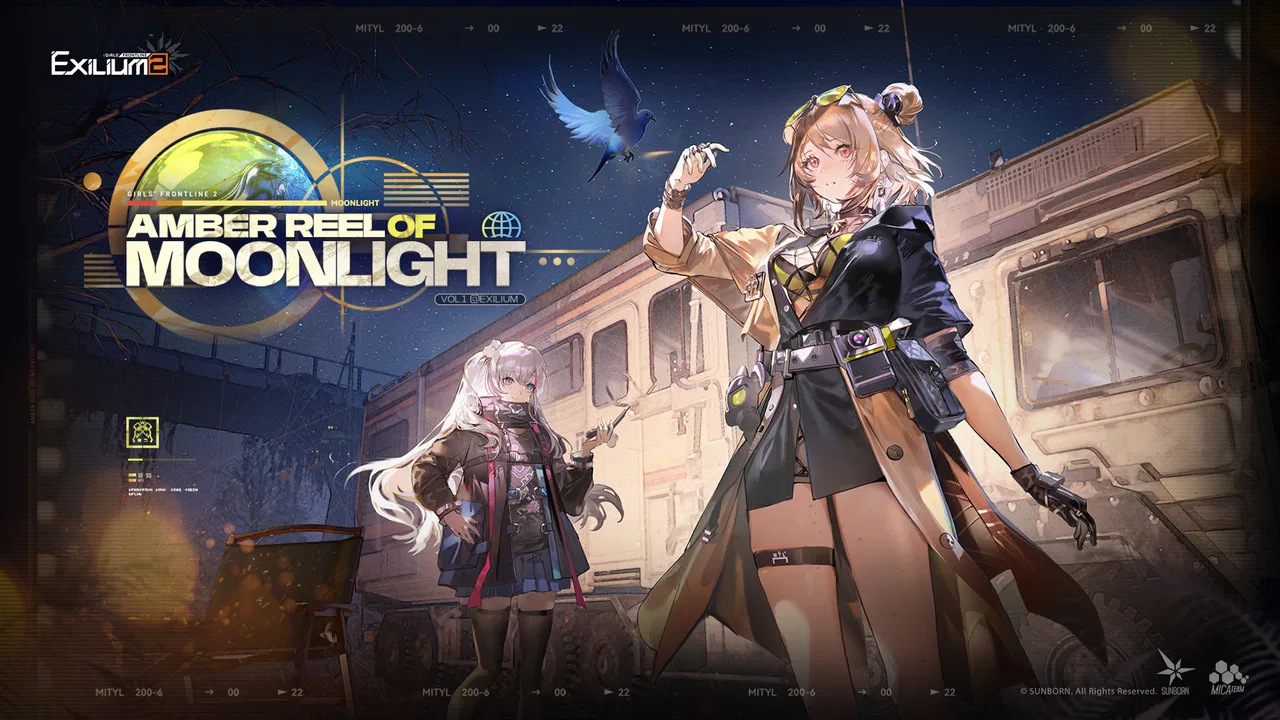
GIRLS' FRONTLINE 2: EXILIUM
- 4.5
- Rating
- 1.00M
- Installs
- Free
- Price

 Analysis by App-foxy
I approached GIRLS' FRONTLINE 2: EXILIUM as a strategy game first and an accessibility test second, paying attention to how much effort it takes to read the battlefield, choose commands, and keep track of a long session. Developed by Darkwinter Software Co., Ltd., it places the player in a military science-fiction setting where planning matters more than simply tapping quickly. That makes it interesting for players who enjoy deliberate decisions, character management, and turn-based pressure rather than reflex-heavy action.
My overall impression is positive, but it is not effortless for every player. The presentation is dense, the amount of information can be demanding, and the Mature 17+ rating reflects a tone that will not suit younger audiences. Still, I found a thoughtful tactical core underneath the stylish character presentation. The game is free to start, has an average rating of 4.5 from around 21 thousand ratings, and has passed one million installs, so there is clearly a substantial audience trying it. The important question is whether its particular mix of visual detail, menus, and strategic planning fits the way you play.
How readable and manageable is the battlefield?
The first thing I noticed is that the game asks me to read several layers at once. A battle is not just about selecting a target. I need to understand positions, terrain, available actions, character roles, and the likely consequences of moving too far forward. That is a strength for anyone who enjoys careful planning, but it also creates a high information load. Players who prefer a clean, minimal interface may need time before the screen feels comfortable.
You May Also Like

 Blood Strike: 2.5 Anniversary
Blood Strike’s Loadouts Turn Every Drop Into a Tactical Gamble
A close look at Blood Strike’s custom loadouts: how fast access to signature weapons reshapes its battle royale rhythm, rewards preparation, and narrows the gap between fights.

 Pandora - Music & Podcasts
Pandora’s Music Is Easy to Start, but Harder to Recover
Pandora’s strength is its low-effort path from a seed to a station. Its weak spot is how much confidence it asks you to place in connection, setup, and quiet recovery.

 8 Ball Pool
 Is Built on Rivalries, Rematches, and Routine
A close look at the rivalries, rematches, shared routines, and unanswered safety questions that turn a quick pool match into a persistent mobile community.

 Samsung Music
’s Quiet Strength Is Playing What You Already Own
Its reach comes less from spectacle than from dependable access to a personal library. That simplicity is both the app’s strongest retention engine and its ceiling.

 AccuWeather: Weather Radar
AccuWeather Review: A Quick, Clear Forecast for Everyday Decisions
For everyday plans, the best forecast is the one you can understand quickly. AccuWeather makes rain timing, radar, and local conditions easy to act on, with a few trade-offs.

 Hill Climb Racing
Why Hill Climb Racing Still Turns Crashes Into One More Run
A tiny car, a bumpy hill and one more upgrade: Hill Climb Racing keeps resurfacing because its simple chaos makes every near-miss feel personal.
More From Our News Desk



The tactical format gives the player more breathing room than a real-time action game. I can pause mentally, inspect the situation, and make a choice instead of relying on split-second reactions. For players with slower processing speed or those who simply dislike frantic controls, this is one of the most welcoming parts of the design. The game rewards looking before acting, and that makes strategic thinking more important than hand speed.
At the same time, turn-based pacing should not be confused with simplicity. A slower battle can still be visually busy. Character portraits, combat effects, status information, and map elements compete for attention. I found that short sessions were easier to follow than long ones, especially when several objectives or character abilities had to be remembered at once. A useful habit is to stop after each major action and check the whole formation rather than immediately chaining commands.
Navigation outside combat has a similar trade-off. The game is built around more than one activity, so the player moves between story content, battles, character development, and other management screens. That variety gives the game depth, but it also means that someone returning after a break may need a moment to remember where a particular task belongs. I would not call the structure confusing, but it is layered rather than instantly obvious.
For players with limited vision, readability will depend heavily on the device and viewing conditions. I would play on the largest comfortable screen available, keep the display clean, and avoid judging the interface while holding the phone at an awkward angle. Small tactical details matter here: an icon that is easy to recognize in a quiet room may be harder to distinguish outdoors or when the screen is reflecting light. The game’s visual style is part of its appeal, but that style can also make important information less visually plain.
One practical approach helped me more than simply increasing the brightness: I treated every screen as a checklist. Before confirming a move, I looked at the selected unit, destination, expected action, and remaining options. This reduces mistakes caused by scanning too quickly. It is especially useful for players who find dense interfaces tiring, because it replaces a broad visual search with a repeatable routine.
Why the tactical pace helps some players
Compared with many mobile strategy games that lean on rapid taps, constant timers, or crowded real-time combat, this one gives planning a more central role. That makes it a better match for someone who wants to play with a stylus, use a careful one-handed grip, or take a few seconds before every decision. It is also more forgiving of a player who needs to divide attention between the game and the surrounding environment, provided the situation is safe and the player is not trying to follow an important story moment at the same time.
The trade-off is that a tactical mistake can feel more frustrating than a missed tap. When the player understands the board but chooses the wrong action, the result is not a control failure; it is a planning failure. That can be satisfying for strategy fans, but players looking for a relaxed, low-consequence phone game may find the mental demand heavier than expected.
Touch, visual effects, and different ways of playing
From a motor perspective, the game is less dependent on rapid finger movement than an action game. The core decisions are deliberate, and that lowers the importance of reaction speed. I found it easier to play when I supported the phone rather than holding it tightly in one hand, because a stable grip made it simpler to inspect the screen and select the intended command.
That does not remove every physical barrier. Mobile touch controls still require accurate selection, and dense screens can make a small mistake costly. Players with tremors, reduced precision, or fatigue may prefer to play in short bursts and avoid rushing through menus. I would also recommend checking every confirmation carefully, particularly when a choice affects progression or uses a limited resource.
The game’s character-focused presentation may appeal to players who enjoy expressive art and animated combat feedback, but visual intensity can become tiring. Bright effects, repeated movement, and a large amount of on-screen information may be uncomfortable for people sensitive to visual stimulation. I found that lowering the surrounding distractions and taking regular breaks made longer sessions more manageable. I would not treat the game as a good choice for playing while already visually exhausted.
Sound is another consideration. Audio can make a game world feel more immediate, but it is not always practical to play with sound on. In a shared room, on public transport, or around sleeping family members, I would rely on visual cues and make sure I was not assuming that an audio signal was the only way to understand an action. The safest habit is to read the screen rather than depending on sound to tell me that something important happened.
Players who are sensitive to mature themes should also think about the content rating before installing. The game is marked Mature 17+, so it is not a suitable recommendation for children simply because it is available on a phone. The military setting and dramatic presentation are central to its identity, and families should make their own decision about whether that tone fits the player.
How to reduce friction during a normal session
My most useful routine was to separate demanding tasks from casual ones. When I had enough time and attention, I handled tactical missions and character decisions. When I was tired or distracted, I avoided making important strategic choices and limited myself to lighter browsing or preparation. This is a small distinction, but it prevents the common mobile-game mistake of starting a serious battle in an unsuitable moment.
A second useful habit is to keep the phone at a comfortable distance and use a stable surface whenever possible. That sounds obvious, yet it matters more in a game where reading a small tactical detail can change the result. Players with limited dexterity may also benefit from tapping deliberately in the center of controls instead of attempting fast sequences around the edges of the screen.
The game is available at no upfront cost, which makes experimentation easy, but optional purchases range from $0.99 to $124.99 per item. That range changes the accessibility conversation because financial pressure can become a barrier of its own. I would recommend deciding in advance whether the game is only being played for free and treating any purchase as a separate decision, not as a requirement for keeping up with a difficult moment.
Playing in short sessions, offline moments, and busy environments
One of the strongest situational advantages is that the strategic format can fit around a varied schedule better than a game that demands continuous real-time attention. I could imagine playing a battle during a quiet break, then stopping before the next decision when work or travel resumed. The important qualification is that not every part of the experience is equally suitable for interruption. Story scenes, tactical turns, and resource choices deserve more attention than a quick glance at a menu.
For example, if I had ten minutes between appointments, I would use that time to review the next objective or prepare my squad rather than begin a complicated encounter with no margin. If I were at home in the evening, I would start the battle and give the board my full attention. This approach makes the game feel more manageable and reduces the chance of making a poor choice because the surrounding situation changed.
It can also work for players who share a device or need to stop frequently, because the turn-based structure does not demand constant physical motion. However, stopping often can weaken concentration. When I returned after a long pause, I needed to re-read the situation instead of assuming I remembered every position. That extra review is a small cost, but it is better than acting on a half-remembered plan.
Travel and public spaces introduce other complications. Glare makes detailed screens harder to read, background noise can make dialogue less comfortable to follow, and an unstable connection can make any mobile game less convenient. I would not choose this as my primary entertainment for a long journey unless I had already tested how comfortable it was in that environment. The game is best when the player can see the screen clearly and give it at least a modest amount of uninterrupted attention.
The minimum operating system is Android 7.0, which keeps the entry point relatively broad for Android players with older devices. Even so, compatibility on paper does not guarantee a comfortable experience on every handset. Screen size, touch accuracy, battery condition, and general performance all affect how demanding a visually rich strategy game feels. If your phone is small or already struggles with other detailed games, I would test it before committing emotionally or financially.
Who will feel at home here?
I think the best audience is someone who enjoys squad-based strategy, can tolerate a busy interface, and likes learning through repeated decisions. Players who want to study positioning and improve gradually will find more to engage with than people who only want a quick daily distraction. The character presentation may attract fans of anime-styled science fiction, but the real reason to stay is the tactical layer beneath it.
I would be more cautious recommending it to someone who wants a very quiet, low-reading experience. It is also not my first suggestion for a player who dislikes resource management, character development, or menus between battles. A simpler puzzle game would be easier for short, interrupted sessions, while a fast action title would better suit someone who wants immediate physical feedback instead of planning.
It is worth separating this game from the usual automatic or idle strategy alternatives. Those games often let the player collect rewards and make occasional upgrades with limited involvement. Here, the appeal is more hands-on: the player’s choices matter during the tactical portion, and success is tied to understanding the situation rather than merely waiting for a timer. That makes it more rewarding for an engaged player, but less convenient for someone who wants background entertainment.
Where the inclusive experience still falls short
My main concern is information density. A player may be able to make decisions slowly, yet still struggle to identify the most important detail among many competing elements. The game would be easier to recommend broadly if every critical piece of information were presented with maximum visual clarity and minimal distraction. Instead, the presentation sometimes asks the player to appreciate style and process strategy at the same time.
Another barrier is cognitive fatigue. A single difficult encounter can require remembering several relationships between units, actions, and positioning choices. That is enjoyable when I am focused, but tiring after a long day. Players with attention-related difficulties may want to divide play into a clear sequence: read the objective, inspect the board, select one action, then reassess. Trying to absorb everything at once is the least comfortable way to approach it.
The free-to-start structure is welcoming, but the purchase range means that financial boundaries should be part of the setup. I would not recommend installing it for a child without an adult deciding how purchases will be handled, especially given the Mature 17+ rating. For adults, the sensible approach is to enjoy the strategic systems first and avoid treating optional spending as a solution to every obstacle.
There is also a difference between being playable and being fully comfortable. I could play carefully without needing rapid reflexes, but that does not mean every screen will suit every eyesight, grip, or attention pattern. Players with significant visual or motor needs should approach it as a personal trial rather than assume that a turn-based game automatically removes accessibility concerns.
The current version is 2.15, so the experience may change over time as the developer adjusts the game. I would keep that in mind when forming expectations: a feature that feels awkward today may be refined later, while a familiar workflow may also shift. For now, my advice is to judge the actual controls and presentation on your own device before spending money or planning to make it a daily game.
My inclusive verdict for strategy fans
I enjoyed GIRLS' FRONTLINE 2: EXILIUM most when I treated it as a deliberate tactical game instead of a quick mobile time-filler. Its turn-based decision-making reduces pressure on reaction speed, and that gives it a genuine advantage for players who need more time to think or who prefer controlled inputs. The science-fiction setting and character-driven presentation add personality, while the strategy systems give the game a reason to remain installed.
Its weaknesses are equally clear. The interface can be busy, visual effects may become tiring, and the mental workload rises during complex encounters. Touch accuracy still matters, and the Mature 17+ rating makes it inappropriate for younger players. The broad purchase range also means that free access should be approached with a firm personal budget rather than vague optimism.
I would recommend it to an adult strategy player who enjoys reading a battlefield, making careful choices, and improving through experience. I would skip it if I wanted something instantly relaxing, highly minimal, or easy to follow while distracted. In my view, the best way to try it is on a comfortable screen, in a quiet setting, with short sessions at first. If that combination works for you, this free strategy game has enough tactical personality to justify the time; if it does not, a simpler turn-based alternative will probably be kinder to your eyes, hands, and attention.
FAQs for GIRLS' FRONTLINE 2: EXILIUM
01What is GIRLS' FRONTLINE 2: EXILIUM about?
GIRLS' FRONTLINE 2: EXILIUM is a tactical role-playing game set in a post-apocalyptic world. You command a squad of highly customizable T-Dolls, deploy them across grid-based battlefields, and make use of cover, terrain, skills, and turn order to defeat enemies. Outside combat, the game also includes story scenes, character interactions, equipment management, and progression systems that gradually expand your team and options.
02Is GIRLS' FRONTLINE 2: EXILIUM free to play?
Yes, GIRLS' FRONTLINE 2: EXILIUM can be downloaded and played for free, but it includes optional in-app purchases. These purchases may provide premium currency, recruitment opportunities, upgrade materials, or other convenience items. You can experience the main story and build a capable roster without paying, although progress and character collection may require more time if you choose not to spend money.
03Does the game require an internet connection?
An internet connection is generally required to play GIRLS' FRONTLINE 2: EXILIUM because the game connects to online services, synchronizes progress, and delivers events, updates, and account features. It is not designed as a fully offline experience. Players should also expect regular downloads for patches and additional assets, so a stable Wi-Fi connection is recommended, especially during the initial installation.
04Is GIRLS' FRONTLINE 2: EXILIUM difficult for beginners?
The game is approachable at the start, with tutorials explaining movement, cover, attacks, skills, and basic squad management. However, later stages become more demanding and require thoughtful team composition, positioning, equipment choices, and timing. Players familiar with turn-based strategy will adapt quickly, while newcomers may need to experiment with different T-Dolls and read enemy abilities carefully instead of relying only on automatic combat.
05What devices are recommended for playing GIRLS' FRONTLINE 2: EXILIUM?
GIRLS' FRONTLINE 2: EXILIUM is a visually detailed 3D game, so performance depends heavily on your phone or tablet. Recent Android and iOS devices with a modern processor, sufficient RAM, and plenty of free storage should provide the smoothest experience. Older or budget devices may need reduced graphics settings and can experience longer loading times, heat, or battery drain during extended sessions.
Pros
- Deep tactical combat with meaningful squad positioning and skill choices.
- Distinctive character designs with detailed animations and voice acting.
- Strong story presentation with cinematic scenes and memorable characters.
- Regular events provide new missions
- rewards
- and limited-time content.
- Multiple progression systems offer long-term goals for dedicated players.
Cons
- Gacha recruitment can make obtaining specific characters unpredictable.
- Energy limits may interrupt longer play sessions.
- Resource management becomes increasingly demanding at higher levels.
- Some menus and systems can feel overwhelming for new players.
- Large updates may require considerable storage space and download time.

GIRLS' FRONTLINE 2: EXILIUM
Gallery